
ADVANCED PAIN MANAGEMENT PHOENIX, AZ
Spinal Cord Stimulation
A trial-based therapy that may help reduce chronic nerve pain in selected patients.

TREATMENT OVERVIEW
What is Spinal Cord Stimulation?
Chronic pain doesn’t just affect your body, it can take over your entire life. If you’ve tried medications, injections, or even surgery and still find yourself limited by pain, you may wonder if there’s another way.
A spinal cord stimulator (SCS) is an advanced medical device designed to manage long-term pain. It works by delivering gentle electrical impulses to the spinal cord, interrupting the pain signals traveling to the brain. Instead of pain, patients often feel a mild tingling sensation or, with newer devices, no sensation at all, just relief.
At Mountain View Headache & Spine Institute, with locations in Phoenix, Mesa, Scottsdale, and Peoria, Arizona, we offer spinal cord stimulation to help patients who have run out of options rediscover comfort, mobility, and hope.
WHEN MIGHT SCS BE CONSIDERED?
When Might Spinal Cord Stimulation Be Considered?
SCS may be an option for individuals with chronic, nerve-related pain, especially when other treatments have not provided lasting relief.
Persistent back or leg pain, including pain after spine surgery
Neuropathic pain (nerve pain)
Complex regional pain syndrome (CRPS)
Ongoing pain despite other treatments such as medications, injections, or physical therapy
How Does the Procedure Work?
Evaluation
We’ll review your symptoms, medical history, and previous treatments to see if spinal cord stimulation may be a good option for you.
Temporary Trial
A short-term, removable stimulation system is placed to test how well spinal cord stimulation reduces your pain, typically over several days.
Review Results
You and your care team will evaluate your pain relief and functional improvement during the trial period.
Permanent Implant (If Appropriate)
If the trial is successful and you decide to proceed, a small stimulation device may be implanted under the skin, with leads positioned near the spinal cord to provide ongoing therapy.
What Happens After The Procedure?
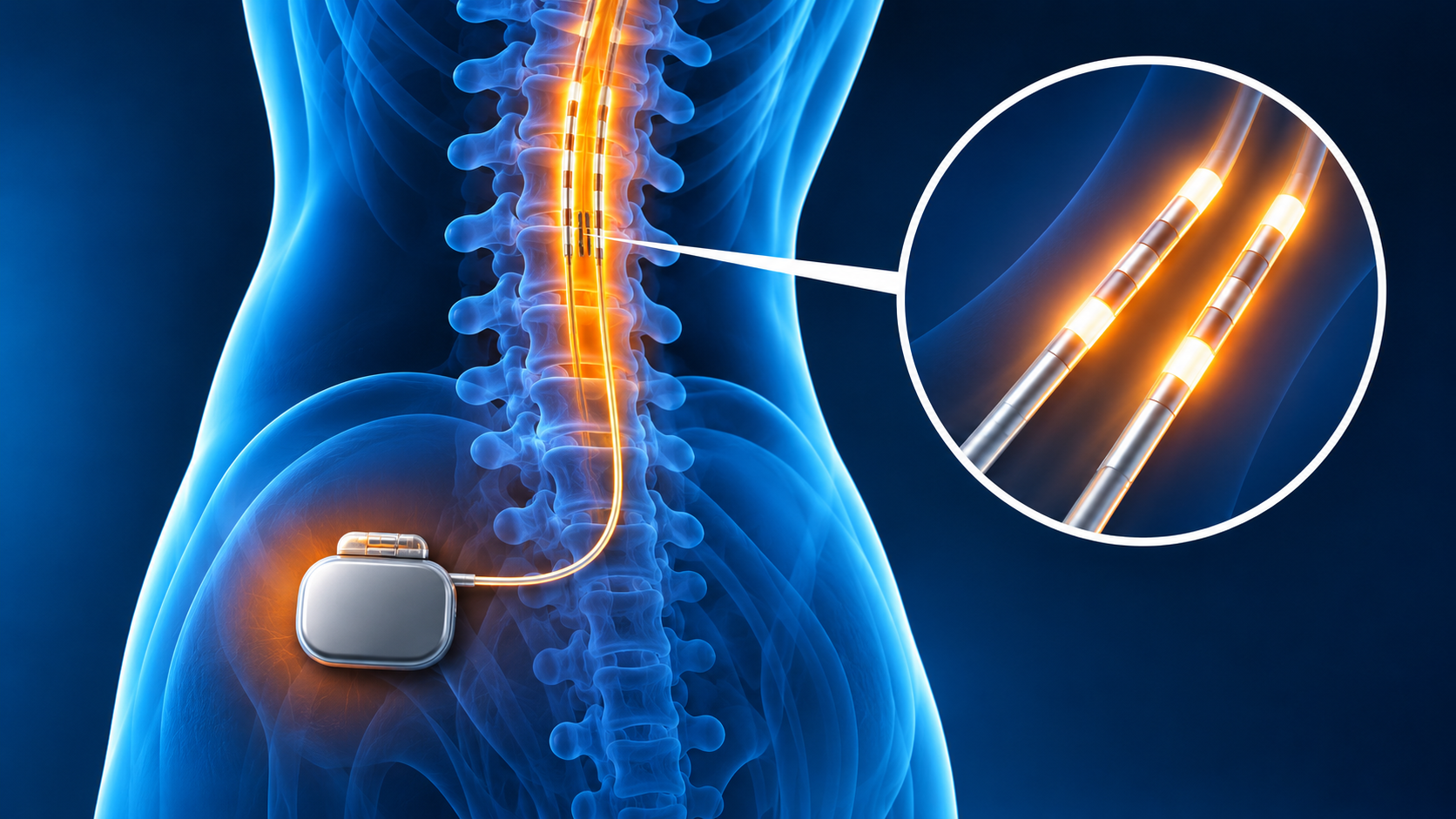
You’ll have follow-up visits to monitor healing and adjust your stimulation settings as needed.
Your care team will provide instructions on activity restrictions, incision care, device use, and recovery. Stimulation settings can be adjusted over time to help manage your symptoms.
TAKE THE NEXT STEP
Find Out If Spinal Cord Stimulation Is Right For You
Schedule a consultation with our team to discuss your symptoms, review your options, and determine if spinal cord stimulation may be appropriate for your care plan.